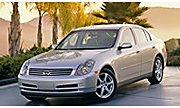
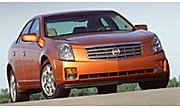
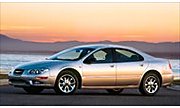
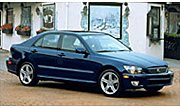
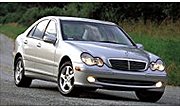
Best Bet
Selection Methodology
Best Bets, practical considerations carry the most weight, with an
emphasis on the actual use of a vehicle type by the majority of owners
as opposed to recreational uses exploited by few. For example, how
well a sport utility vehicle performs off-road and how much weight it
can tow get little consideration in determining a best overall SUV. We
concentrate on the attributes that call for interpretation or that
might benefit from my experience with many vehicles. In short,
anything you can determine easily on your own through the use of this
site — such as towing capacities — is left to you.
This is why exterior styling gets little consideration. Beauty is in
the beholder's eye. Interior design/quality gets more attention, not
in the sense of design but in terms of ergonomics and what the
automotive industry terms "perceived quality": materials and the feel
of controls and handles and the like, which is not as easy for
shoppers to compare from one model to the next.
Safety is highly weighted in most categories, especially minivans and
SUVs, which have become the minivan alternative.
Due to the rollover risk in SUVs, the most important features
considered are rollover mitigation systems, electronic stability
systems and side curtain-type airbags. In small vehicles, side-impact
airbags and curtains are highly weighted, as they often prove to be
the difference between a Poor and a Good IIHS rating for a particular
model. Sports cars are the category for which safety carries the least
weight, in keeping with consumer priorities. However, no vehicle with
weak crash-test ratings is eligible for any Best Bet. A new, untested
model may be cited with a caveat.
Ownership cost/reliability is another important consideration because
low ownership cost can easily compensate for a higher sale price.
Aside from being a drag, repairs are a significant component. For
reliability data, we rely on J.D. Power and Associates' Mechanical
Reliability Ratings and Consumer Reports' Reliability Histories. Other
factors in cost of ownership include fuel economy, required fuel grade
(octane) and insurance costs.
New and redesigned models have no reliability data. These entrants
will remain innocent unless proven guilty and may earn a Best Bet
citation along with a caveat.
It's best not to assume a car-based SUV like Toyota's RAV4 will handle
like a car.
Ride and handling differ widely, especially among SUV models — and one
can no longer presume that truck-based SUVs will ride like trucks or
that car-based ones will ride well. Handling performance is critical
in sporty cars, but also in SUVs as it regards controllability and
top-heaviness. More modest cars are expected to be safe, but
exceptional handling is more of a bonus than a requirement.
Roominess and comfort are important because exterior size tends to
mislead. The main criterion here is how accommodating the seats are —
and, in vans and SUVs, how many you get for your money. Actual seat
comfort gets less attention, mainly because tastes differ.
Acceleration gets the most weight among sporty cars, but all vehicles
can be classified in one of three categories: not quick enough, quick
enough and more than quick enough, with consideration given to the
issue of load whenever possible. Most vehicles on the road are, at
minimum, quick enough if you're not a lead foot. Transmission
performance is also an issue, and automatics that are unrefined or
slow to react are graded harshly.
Choices are important in the battle for an overall Best Bet because
the right car for you isn't automatically the right one for someone
else. A model that comes with multiple engine and transmission
choices, for example, has definite advantages. An automaker might give
you one large engine for the price of a competitor's vehicle with a
smaller standard engine. To some, this is an advantage, but if you
want to pay less at the pump, the lack of engine choices is a
disadvantage to you.
By Joe Wiesenfelder,
Premium Vehicles
Multifunction steering wheels are common in premium vehicles.
Automatic climate control: Single-zone automatic climate control is
typically standard fare across luxury nameplates. Dual-zone systems
are becoming more common; they offer separate temperature controls for
the driver and front passenger, but they rarely work beyond 10 degrees
of each other.
Multifunction steering wheel: Many nonluxury vehicles have redundant
audio and cruise controls on the steering wheel; in this age, luxury
nameplates should equip all their models with them.
Moonroof: Premium vehicles often include this feature as standard
equipment. If it's listed as optional, consider the car's overall
ambiance. Low rooflines may create an uninviting interior without the
additional light from the moonroof. A moonroof can, however, cut an
inch or more of front headroom, leaving taller drivers short on space.
Premium upholstery: At this price many automakers use a leather
substitute or premium fabric standard and charge extra for genuine
cowhide. Leather is often bundled with other items in pricey options
packages — adding a Sport Package to a base 2006 Audi A3 to get
leather costs $1,800 — so consider its look and comfort relative to
the price.
Power driver's seat: A power-operated driver's seat allows
near-infinite adjustments with much less effort. Look for at least
three power adjustments: recline, fore/aft travel and cushion height —
typically called six-way adjustment.
Near-Luxury Vehicles:
Near-luxury vehicles should feature an in-dash CD changer, such as the
six-disc unit on the Lincoln Zephyr.
Luxury-nameplate vehicles costing $28,000 to $40,000 should offer
considerably more features than the premium segment. Among them are:
Basic trip computer: Depending on complexity, trip computers can offer
information on gas mileage, average speed, outside temperature and
maintenance. They're often optional in cheaper vehicles, but at this
price they should be offered without extra charge.
Heated front seats: Heated seats are a convenience feature available
in nearly every vehicle segment today. Look for at least a two-setting
heater (high and low) that heats both the seatback and the cushion.
In-dash CD changer: A CD changer allows continual music with fewer
stops to change discs. Trunk- or glovebox-mounted CD changers are
inconvenient relics of the past — in this class, an in-dash unit
should play six CDs. One exception: If a navigation system preempts
the dash space, some vehicles offer a single-disc player instead, or a
remote CD changer in the glove compartment, center console, trunk or
cargo area, or under a seat.
Leather upholstery: Leather might be optional in the premium segment,
but in near-luxury cars it should be standard. It comes in all manner
of qualities, perforations and combinations, so recommending a
specific grade is impossible. Don't mistake the upholstery's character
for its quality: a BMW has firmer leather than a Lincoln because the
former is intended for sportier driving.
Memory driver's seat: A memory function is convenient if another
person frequently drives the car. If you're the sole driver, this is a
negligible feature. By recognizing a signal from the key fob, advanced
systems adjust everything from seats, side mirrors and adjustable
pedals to powered head restraints, seat belt anchors and stereo and
ventilation settings.
Power passenger seat: Four-way power adjustment — fore/aft and recline
— should be included in every near-luxury car. Additional adjustments,
such as seat height or cushion angle, are pleasant but rarely
necessary.
Satellite radio: If a CD changer runs out of tunes in seven hours, a
satellite radio picks up and never stops. It's a feature that should
be standard across the near-luxury class, though many owners won't
want to pay the monthly subscription fees.
Luxury Vehicles
The trim of the Infiniti M, or any other luxury car, warrants
inspection before purchase.
Luxury vehicles costing between $40,000 and $100,000 are a nebulous
class because their price range is so broad. At the low end are
vehicles that might include many of the features below as options,
while high-end models list them as standard.
Adaptive cruise control: Adaptive cruise control uses radar or lasers
to determine the distance to the vehicle in front of your car. It
adjusts speed accordingly, applying light braking if necessary. Many
systems alert drivers if the vehicle in front decelerates abruptly.
Adaptive suspension: Adaptive suspensions can vary the firmness of
individual struts or shock absorbers, changing a vehicle's ride within
milliseconds. Advanced systems sense road conditions and stiffen
suspension points to provide appropriate handling. Some allow drivers
to select suspension settings based on how firm a ride they want,
though some manufacturers deem this manual control unnecessary for
some vehicle types. Drivers used to have to choose between a vehicle
that rode comfortably and one that handled well, but, to some extent,
adaptive suspension provides both.
Advanced climate controls: Dual-zone automatic climate controls offer
individual temperature settings for the driver and front passenger,
but advanced systems allow fan speeds and airflow to vary between the
two zones. In a BMW 3 Series, for example, both temperature zones must
operate on the same fan speed and airflow setting. On a 7 Series,
these settings are variable; the driver can program warmer air to hit
her feet, while the passenger opts for cooler air to blow toward his
face.
Genuine trim: Painted plastics that resemble wood or aluminum are
available in cheaper cars, and sometimes they look very close to the
real thing. But in this price class, a vehicle should have genuine
trim — be it wood, aluminum or carbon fiber. Some models also apply
trim to the steering wheel. Bear in mind that execution matters: The
best painted plastic looks better than the worst genuine stuff.
Heated steering wheel: Electrically heated steering wheels heat faster
than traditional climate-control systems, warming hands long before
the ambient air does. Most operate at the push of a button, though
some automatically activate when the seat heaters are switched on.
The Land Rover Range Rover Sport has a standard navigation system.
Intelligent remote entry: Known by various names — SmartAccess,
Keyless Go, Intelligent Key — many luxury key fobs constantly transmit
a signal that communicates with the car when it's nearby. This tells
the car door to unlock when its handle is pulled — even if the remote
is in a pocket or purse. It's a convenient feature if you're holding
an armful of groceries or if you don't want to dig for your keys. It's
often paired with a push-button engine start system, which also allows
the transmitter to remain out of sight.
Navigation system: Navigation systems come in all varieties. The key
is intuitiveness: Systems that bury simple commands in layers of menus
or don't offer any touch-screen options can be more frustrating than
helpful. Ironically, simpler systems in cheaper cars can often be more
user-friendly. Most cars closer to $100,000 offer standard navigation
systems, while virtually all others in this class list them as
options.
Onboard data processor: An onboard processor should minimally operate
as an advanced trip computer that reports relevant vehicle statistics.
On pricier vehicles in this class, the feature may include a hard
drive that stores music, maintenance files and navigation data.
Power-adjustable steering column: A power-adjustable steering column
tilts and telescopes at the push of a button. Some versions
automatically tilt away from the driver during entry and exit. A
power-adjustable steering column will likely be optional at the
$40,000 end of the segment, but any vehicle priced near six figures
should include one standard.
Power lumbar supports: Manual lumbar support is universally available,
but luxury vehicles should include power-operated supports for both
front seats. Power lumbar systems use inflatable sections within the
cushion or seatback to adjust firmness. The most advanced type allows
you to choose the support's height.
Premium sound system: At this level, vehicles are quiet enough to
allow a high-end sound system to shine. Luxury automakers often pair
vehicle audio systems with a premium audio-component manufacturer like
Bose, Mark Levinson or Harman/Kardon. It's impossible to compare
wattage or speaker count at face value, as interior acoustics and
speaker quality determine the end result.
The Mercedes-Benz S-Class is one luxury vehicle that offers a variety
of rear-seat amenities.
Rear-seat accoutrements: Backseat features become more lavish as
prices increase. Heated rear seats are common on the low end of this
segment, with power-operated seatbacks, individual temperature
controls and cooled rear seats available on vehicles closer to
$100,000.
Rear sunshades: Whether manual or power-operated, rear sunshades keep
backseat passengers in the shade on sunny days. Many luxury cars have
a sunshade in the rear window, though some also offer either powered
or manual sunshades for the rear side windows.
Remote start: Remote start systems include a button on the key fob
that can start the car from several hundred feet away, usually while
keeping the vehicle locked. Starting the vehicle early allows a
climate-control system to bring the cabin to a comfortable temperature
by the time you arrive.
Ventilated/cooled front seats: Seats act as an insulator against the
body's backside — a good thing on a cold day, but if it's already
warm, they can cause considerable discomfort. Ventilated seats
typically use embedded fans to blow air through perforations in the
upholstery. Cooled seats go one step further by blowing cold air.
Ultra-luxury
Vehicles
A panoramic moonroof and refrigerator, both on the Maybach 62, define
the ultraluxury class.
Luxury vehicles costing more than $100,000 offer superfluous features
by the truckload. Some notable ones:
Full leather trim: Seats and door inserts are not the only place for
leather. Ceilings, instrument panel domes, dashboards and center
consoles can be stitched up as well. It's often a pricey option on
sub-$100,000 cars, but should be standard in the ultraluxury class.
Massaging seats: These are a recent luxury innovation that are
available for both front and rear seats. Some systems, such as BMW's
Active Support, use liquid-filled bladders that slowly flow from one
side to the other; others use embedded motors. Either way, the systems
aim to relieve fatigue over extended trips.
Refrigerator: Typically mounted between the rear seats, an onboard
refrigerator keeps chilled beverages at hand for backseat passengers.
Panoramic moonroof: Essentially a fixed glass pane behind an existing
moonroof, panoramic moonroofs give the cabin a more airy, open feel —
especially over the backseat.
TIPS
Place your
favorite brand of dryer sheets in the glove box, under the seats, in
the trunk or any other little place that can use a fresh smell.
Use a
long handled soft-bristled floor sweeping type brush or mop with a
wide mouth bucket of soapy water to clean those hard to reach areas on
the car or truck.
It is
always a good idea to check the water, oil and tires before leaving
the house, even though everything was okay yesterday.
Look
for anything unusual with your tires such as, low air, lumps, bumps or
bulges, nails, screws. Carefully run your hand across the top and
sides of your tires feeling for any wire coming through or worn
areas.
Check
your gas gage.
Be
prepared, change or add antifreeze before winter sets in and the
stores sell out.
While
you have the hood up, look at any visible belts for worn or frayed
areas.
Change the oil and oil filter every 3,000 miles.
Have
a tune-up done on your auto periodically; you can check your auto
manual for the specifics.
Add
life to your auto by having the timing belt checked or changed after
100,000 miles.
Change windshield wiper blades before they scratch and ruin your
windshield.
Keeps
the car doors locked.
Keep
a spare key somewhere other than inside the car. Give a spare key to a
trusted family member that can assist you if the time should ever come
about.
Never
leave the trunk lid open an unattended.
Watch
children’s fingers when closing the doors.
Never
leave children, pets or the elderly in a car at any time unattended.
Never
sit in a parked car with the heater running. You risk the chance of
being overcome by exhaust fumes.
For
safety sake, let someone know where you’re going.
Be
prepared; carry an emergency kit for yourself, your passengers and
your auto.
A
personal emergency kit could include, Band-Aids, wound ointment,
rubbing alcohol, aspirin or non-aspirin pain reliever, eye drops, a
cloth for making an emergency wrap, water, crackers, and so on.
An
auto emergency kit could include, a flashlight, jumper cables, water,
oil, a screwdriver, an adjustable wrench, fix-a-flat, electrical tape,
twine or rope, rags, safety flares, a candle, matches, writing paper
and pen, call for help sign, and so on.


 Near-Luxury Passenger Cars